
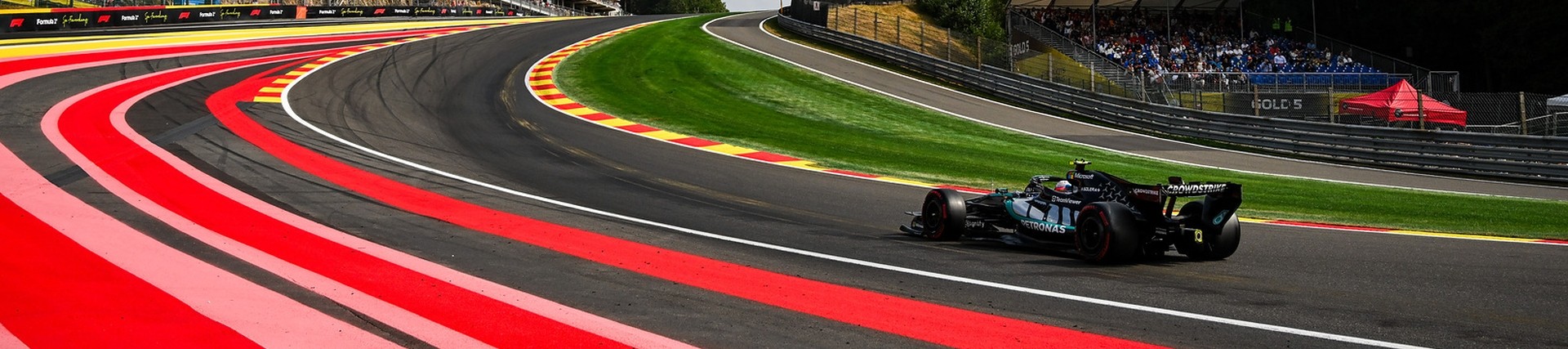
From Tornadoes to Turbo-Hybrids: How RAF Veteran Jonathan Wilcox Found His Dream Job at Mercedes-AMG PETRONAS Formula One Team
When Jonathan Wilcox joined the Royal Air Force in 1999, he couldn’t have imagined that more than two decades later he would be standing in the Mercedes Formula One garage with a front row seat for a championship-deciding finale.
Today, Wilcox is Trackside Electronics Support Engineer for the Mercedes-AMG PETRONAS Formula One Team, responsible for ensuring every electronic system on driver Kimi Antonelli’s car is functioning perfectly before each session of a Grand Prix weekend. Working for the team since 2021, it is a dream job for a lifelong motorsport enthusiast, but one he says was built on military discipline, long-term planning and years of networking.
His journey also offers valuable lessons for service leavers wondering how to translate military skills into civilian success.
Watch the full interview below:
A 22-year RAF career
Wilcox spent almost 23 years in the RAF after joining as an aircraft engineer before specialising in avionics.
“I joined the RAF March 10th, 1999 as an aircraft engineer. I streamed as an avionics engineer, much to my father’s amusement, who previously served as an airframes technician. I spent the vast majority of my career working on Tornadoes. I did a short tour around two, two-and-a-half years on the Red Arrows and I finished my career back at Marham on Tornadoes and then eventually streamed on to F-35 for the last four years of my career.”
Although he had always intended to complete a full military career, Wilcox also recognised early that one day he would need to prepare for civilian employment.
“I’d always intended to do a 22-year career in the military. That was a target for myself personally. But because of that, I also knew that I would need to be prepared for a civilian role in whatever industry.”
That mindset would prove critical years later.
A chance meeting with Mercedes
Wilcox’s path into Formula One began almost by accident. While serving with the Red Arrows, Mercedes brought one of its Formula One cars to RAF Scampton to film a BBC feature ahead of the British Grand Prix. As a self-confessed petrolhead, Wilcox seized the opportunity.
“I’ve been a lifelong petrol head. Basically, anything with an engine that goes quickly, I’m interested in.”
Rather than simply admiring the car, he spent two days talking to the Mercedes engineers, studying the electronics and asking endless questions.
“I struck up a friendship with Pete Bonington… I spent two days basically chewing the ear off the engineers that were there, looking around the car, trying to learn about the electronics and the, I guess, the avionics, if you want to call it, of the car.”
Those conversations became lasting professional relationships that would ultimately open the door to Formula One years later.
Preparing long before leaving
One of Wilcox’s biggest advantages was that he started preparing for civilian employment years before he intended to leave the RAF. By 2013, nearly a decade before leaving service, he already had a professionally structured CV that he continually updated throughout his military career.
“I’d already had a CV prepared… I was able to just kind of keep that up to date and tweak it and tailor it. Just as I did things in the RAF, I’d add them to my CV.”
That preparation paid off when Mercedes began exploring the idea of recruiting outside Formula One’s traditionally insular talent pool.
“They were keen as a team to explore whether or not we can employ people that are outside of the somewhat incestuous nature of the Formula One pit lane, where people move between teams.”
Mercedes invited him to interview for an electronics technician role despite knowing he lacked Formula One experience.
“They were very honest. They said it’s likely that you’re not going to be hired. However, we feel it would be a benefit to us, but also a benefit to you to experience and to have a civilian style interview.”
Wilcox embraced the opportunity anyway.
“I was like, absolutely. I’ll take any opportunity to get that experience.”
Although he didn’t get the job, the interview achieved something far more important.
“The interview went really well. I took a lot from it. They got a lot from me. And as a consequence, I just stayed in touch.”

Turning down the dream
In 2017, while completing F-35 conversion training at Eglin Air Force Base in Florida, Mercedes contacted him again.
This time there was a systems engineer vacancy they believed perfectly suited his background.
“I was like, this could be my one chance to land my dream job.”
He interviewed successfully and was offered the role. But timing mattered.
His wife was entering a demanding phase in her own career, the couple had two young daughters, and accepting the job would have meant leaving the RAF several years early, sacrificing pension benefits and financial security.
“I reluctantly, but for the right reasons, decided I had to turn down the role.”
Many people would have assumed that opportunity had gone forever.
“So I remained very good friends with Bono and Rob and Evan and just stayed in touch.”
Four years later, the phone rang again.
The engineer Mercedes had hired instead of him was leaving. This time the circumstances were different.
Wilcox interviewed again, was offered the role and accepted.
“I think I may have sworn a couple of times… when they said, ‘We’d like to offer you the role.’”
A baptism of fire
His first experience trackside could hardly have been more dramatic.
After joining Mercedes in October 2021, his first race weekend was the Abu Dhabi Grand Prix that decided the championship between Lewis Hamilton and Max Verstappen.
“My first experience trackside was Abu Dhabi of 2021… It was very surreal to be in the garage when the drivers’ championship concluded that year.”
“There was a bit of me that was kind of thinking, ‘What the hell have I let myself in for here?’”
Fast forward several seasons and Wilcox says simply:
“I’ve done goodness knows how many races now and love every second of it.”
Military standards transfer directly
Despite moving from military aviation to elite motorsport, Wilcox says the transition felt remarkably natural.
“It was in many respects.”
He believes both environments are built around procedures, precision and consistency.
“We always used to talk about you operate in the military, you operate within a box of standards. The second that you step outside of that box is when you increase the risk. It’s very much the same in Formula One. You want to stick to a real strict set of procedures… because it limits as much as possible any chance of any failure.”
The similarities extend beyond engineering.
“I only ever worked on fast jet squadrons. I equate what I experienced there very closely to what I experienced in the garage.”
Small, specialist teams operating under intense time pressure with absolute reliance on teamwork create an environment familiar to anyone who has served on an operational squadron.
Advice for service leavers
Having successfully made the leap himself, Wilcox has clear advice for anyone preparing to leave the Armed Forces.
His first recommendation is simple: start early.
“Get on with a CV as early as you possibly can.”
More importantly, he says veterans must learn to translate military experience into language civilian employers understand.
“It just gets you into a mindset of what does good look like to a civilian employer and how can I translate what I do in the military to a civilian employer.”
He also warns against overloading a CV.
“You don’t want it to be any more than probably a side and a half of A4. I think mine was nearly three sides… and the chap I gave it to said, ‘I’ve got to be honest, it’s incredibly wordy and I was dozing off by the time we got to the second side.’”
Networking, he says, is equally important.
“Networking meant that I got to speak to people… not to say, ‘Here’s my CV, give me a job.’ It was… ‘Can you give me some advice? Does my CV read okay to you as a civilian employer?’”
That willingness to seek advice, rather than ask for favours, helped him build relationships that lasted for years.
Above all, Wilcox believes service personnel should have confidence in the value they offer.
“There’s no doubt that military personnel have talents and abilities in abundance that any civilian employer would love to have.”
The challenge is making those abilities understandable.
“They need to know how does that translate into a civilian role and a civilian career.”
His final message is simple.
“CV, networking, get out to events, get out and just speak to people, exchange numbers, stay in touch with people. Those sorts of things are incredibly valuable.”
“That’s what made my own transition, I think, as smooth as it could have been.”
Why veterans belong in Formula One
Wilcox believes Formula One is an excellent fit for former service personnel. The habits built during military service remain valuable in an industry where every second matters.
“I think it’s discipline number one. All the basics of punctuality, being correctly dressed… the mindset of putting on a uniform and being somewhere on time when you need to be.”
Beyond engineering, he believes veterans can succeed throughout the paddock.
“The same goes for logistics and for administration and HR and all of those things. Those are all roles that transition easily into Formula One.”
For those determined to work in motorsport, however, he encourages gaining practical experience first. He points out that Formula One is fast-paced, noisy and demanding, so prospective employees should experience that environment before committing themselves.
“It’s very noisy, it’s very hectic. There’s loads going on.”
His own introduction was far from glamorous.
“I literally washed wheels, cleaned windscreens… you just get experience and you kind of figure out whether it’s going to be something for you or not.”
Looking back, Wilcox’s journey from RAF avionics engineer to Mercedes Formula One engineer was anything but straightforward. Yet his experience demonstrates that successful military transition is rarely about luck. It is about preparation, relationships, adaptability and recognising that the qualities forged during military service often have enormous value beyond it.
As Wilcox’s story shows, the path from a Tornado squadron to the Formula One pit lane may be unusual - but for service leavers willing to prepare early and back themselves, it is far from impossible.
At Morson Edge, our dedicated veteran recruitment arm supports ex-forces professionals into industries where precision, discipline, and resilience make all the difference. Get in touch with the team to find your next opportunity #BeyondTheUniform


